Moving into the high school level, these books highlight how teens can continue shaping a more sustainable world well into adulthood. From simple, at-home reuse projects to growing their own food, each book offers practical, age‑appropriate strategies students can apply as they build long‑term eco‑friendly habits.
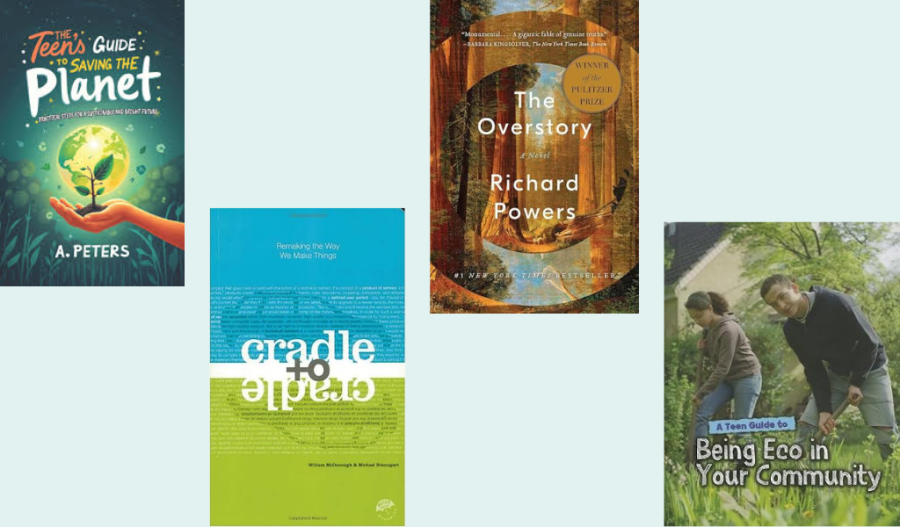
The Teen’s Guide to Saving the Planet by A. Peters: This accessible guide offers practical tips students can apply immediately—whether they’re building long-term sustainable habits, developing independence, or preparing for adulthood. By replacing climate anxiety with active personal agency, this handbook gives young people tools to cut waste and conserve energy right now. Teachers can use it to support advisory periods, SEL lessons, or student‑led environmental initiatives.
Cradle to Cradle by William McDonough and Michael Braungart: This influential book encourages students to rethink how products are designed, used, and discarded. The authors introduce the “cradle‑to‑cradle” model, where materials are continuously reused or safely returned to nature—an idea that aligns well with systems thinking and sustainability education. Teachers can use this book to enrich environmental science units, spark critical thinking about consumer culture, and inspire design‑focused projects centered on waste reduction.
The Overstory by Richard Powers: This Pulitzer Prize‑winning novel offers rich, thematic material for high school classrooms. Through interconnected stories of nine individuals whose lives are transformed by their relationships with trees, students explore themes of activism, ecology, interconnectedness, and moral responsibility. Teachers can use this book to support literature circles, AP English discussions, or cross‑curricular collaborations with environmental science, especially when examining deforestation and environmental justice.
A Teen Guide to Being Eco in Your Community by Cath Senker: This book encourages students to take environmental action close to home, highlighting ways teens can collaborate with local groups, participate in eco‑clubs, and contribute to school‑based sustainability efforts. Teachers can use this resource to support service‑learning projects, community partnerships, or student‑driven environmental campaigns that extend learning beyond the classroom.
These book recommendations are just a few of the many green-friendly books that can help students explore sustainable practices and consider how their everyday choices affect the environment. Using books focused on actions can support classroom discussions, reinforce environmental concepts, and encourage environmental stewardship throughout the school year. Also consider looking back at the 12 Eco-Friendly Books for the New School Year: Volume 1 for even more book suggestions.