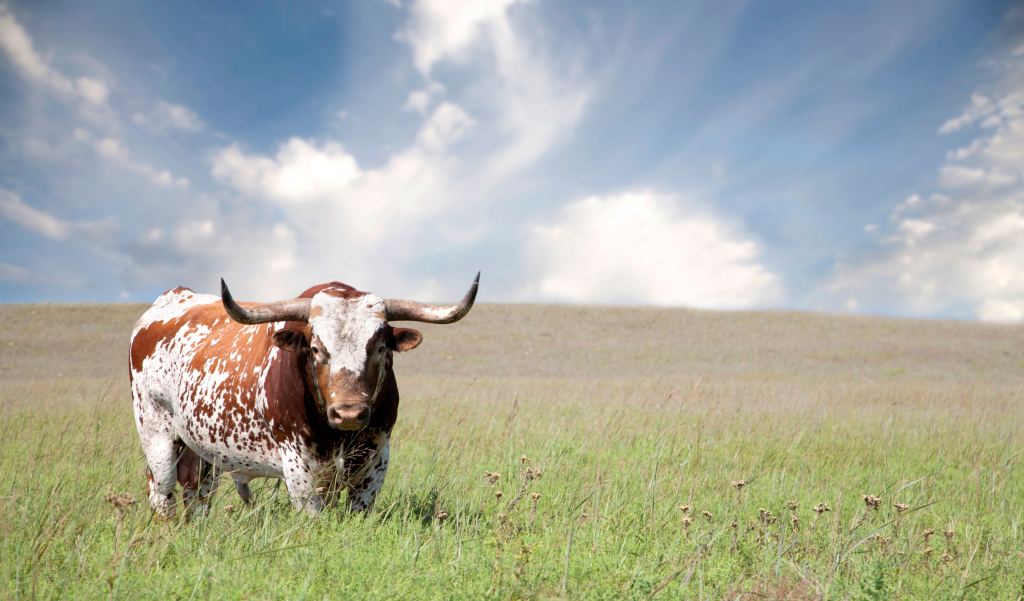
Bison are a keystone species of the prairie landscape which previously covered nearly seventy-five percent of Texas. However, due to agriculture, urbanization, and general land use changes, less than one percent of these native grasslands remain. Bison herds were an essential part of the prairie ecosystem and developed a symbiotic relationship with the prairie plant life. Bison grazing removed dead vegetation, encouraged new plant growth, and naturally fertilized the land, allowing plants to flourish.
At one time 30 to 60 million bison roamed the North American plains before they were hunted to near extinction in Texas in the late 1800s. As bison populations dwindled, cattle became the replacement. However, most ranchers at this time practiced open range grazing, and later controlled grazing, which leads to overgrazing and degradation of the soil and native grasses.
Regenerative agriculture emerged as a new way of farming and ranching that improves the overall health of the land by incorporating crop rotation, cover cropping, and minimizing synthetic pesticides and fertilizer use. This land management style improves soil fertility and allows pasture grasslands time to recover. Not only was this process a smart move for survival, but it also helped preserve resources for future generations.
Some modern farmers are recognizing the importance of proper land management and are moving back to regenerative agricultural methods that restore native grasses, reduce erosion, and reduce nutrient loss. In 2016, Brockriede Brothers & Lalk Brothers Farms won the Texas Environmental Excellence Award for Agriculture for their no-till farming practices. The brothers’ farms have been used as sites for educating children, college students, and conservation groups on strategies for water and soil conservation. More recently, Bird and Bee Farm won the Agriculture TEEA for their 100-acre conservation project that is restoring the land back to post oak savannah prairie, including 39 different species of native grasses and wildflowers.